
In DeFi, most collateral still consists of stablecoins or highly volatile cryptocurrencies. Meanwhile, although gold and silver are familiar assets in traditional finance, bringing them on-chain remains challenging due to custody, auditing, and transfer-related barriers. Strato positions itself as a Layer 1 blockchain focused on RWA and DeFi, specializing in the tokenization of gold, silver, and other real-world assets while turning them into assets that can be used for lending, borrowing, swaps, liquidity provision, and stablecoin issuance.
So, what makes Strato special? Let’s explore the Layer 1 blockchain bringing tokenized gold and silver into DeFi in the article below!
What Is Strato?
Strato is a Layer 1 blockchain designed for DeFi and real-world assets (RWA), developed by BlockApps. The project is EVM-compatible and supports activities such as borrowing, lending, asset swaps, liquidity provision, asset bridging, APIs, and smart contract integrations.
Strato Homepage
Strato focuses on the HardFi model, bringing store-of-value assets such as gold, silver, BTC, ETH, stablecoins, and selected RWAs into DeFi. Users can use these assets as collateral to mint USDST or participate in yield-generating products within the ecosystem.
Unlike tokenized gold products designed mainly for holding, Strato aims to turn gold and silver into productive assets that can be used for borrowing, liquidity provision, and on-chain stablecoin issuance.
What Makes Strato Special?
One of Strato’s most notable features is how the project combines three layers: its own blockchain, real-world collateral, and the USDST stablecoin.
GOLDST and SILVST are introduced as assets representing physical gold and silver. They are reportedly backed 1:1 by metals stored in a vault in New York, subject to periodic audits, and redeemable for physical metal.
Using this asset layer, users can mint or borrow USDST and then use it for DeFi activities such as lending, liquidity provision, swaps, or yield strategies. This approach allows Strato to expand the role of gold and silver from simple stores of value into assets that can actively operate within an on-chain financial ecosystem.
For RWA projects, the key factor is not limited to smart contracts but also includes the underlying real-world assets. Strato states that the gold and silver available on its platform are backed 1:1 by physical metals stored in a New York vault through its partner, BA Gold Enterprises Inc.
In its Q1 2026 audit results announcement, Strato stated that a confirmation letter from BA Gold recorded 711 ounces of gold and more than 46,000 ounces of silver held as backing for the platform’s metal tokens. The project also published independent CPA audit documentation and a custodian confirmation letter for users to review.
However, this model still depends on several off-chain components, including custodians, auditors, physical redemption procedures, and the consistency between on-chain data and real-world assets. These are important risk factors that users should carefully assess when considering RWA projects.
How Strato Works
Strato is built around four main components:
-
EVM-compatible Layer 1: Strato’s proprietary blockchain, built on a Haskell Ethereum client. It supports Solidity, smart contracts, RPC endpoints, and a validator architecture.
-
Collateral assets: These include GOLDST, SILVST, BTC, ETH, liquid staking tokens, stablecoins, and selected RWAs used as collateral in DeFi activities.
-
USDST: Strato’s native stablecoin, minted through collateralized debt positions and used for transaction fees, lending, swaps, and liquidity provision.
-
DeFi applications: These include lending, borrowing, liquidity pools, swaps, savings vaults, arbitrage vaults, and developer tools.
When users deposit assets into a collateralized debt position, or CDP, they can mint USDST based on the value of their collateral. The position must maintain a safe collateralization ratio; otherwise, it may face liquidation.
USDST can then be used for lending, swaps, liquidity pools, savings vaults, or other yield-generating strategies.
For example, users can bridge assets from Ethereum to Strato, use those assets as collateral to mint USDST, and then use USDST to pay gas fees, provide liquidity, or participate in DeFi products within the ecosystem.
Strato’s Main Features
Tokenized Gold and Silver
-
Tokenized gold and silver: Strato supports GOLDST and SILVST, which are described as being backed 1:1 by physical metals and eligible for redemption.
-
Borrowing and CDPs: Users can use collateral to borrow or mint USDST through dedicated vaults.
-
USDST: Strato’s native stablecoin, used for transaction fees, DeFi trading, and borrowing or minting positions within the ecosystem.
-
Swaps and liquidity: Users can swap assets, provide liquidity, and earn trading fees or reward points depending on the applicable program.
-
Rewards: A pre-TGE points program that distributes points for activities such as minting USDST, providing liquidity, using the Savings Vault, and participating in pools.
-
Arbitrage Vault: A vault that uses automated bots to trade price differences between liquidity pools and oracles. It carries market, oracle, liquidity, and smart contract risks.
-
Developer tools: Strato provides APIs, RPC endpoints, Swagger documentation, smart contract integration resources, and guides for building applications, bots, and dashboards.
Strato Token and Tokenomics
Basic Information About the STRATO Token
| Parameter | Information |
|---|---|
| Token name | Strato |
| Ticker | STRATO |
| Blockchain | Strato |
| Contract | To be updated |
| Total supply | 100,000,000 STRATO |
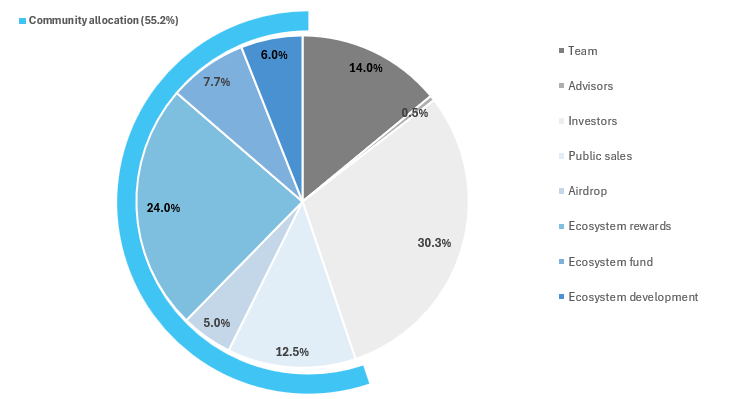
STRATO Token Allocation
-
Team: 14%
-
Advisors: 0.5%
-
Investors: 30.3%
-
Pre-TGE sale rounds: 12.5%
-
Airdrop: 5%
-
Ecosystem rewards: 24%
-
Ecosystem treasury: 7.7%
-
Ecosystem development: 6%
STRATO Token Utility
-
Gas fees: STRATO is used to pay transaction fees on the network.
-
Staking: Users can stake STRATO to participate in network security.
-
Validators and delegators: The token supports participation in network validation or delegation.
-
Borrowing fee discounts: STRATO may be used to reduce fees for borrowers within the ecosystem.
-
Governance: STRATO holders can participate in protocol governance decisions.
Strato Development Roadmap
At present, Strato has not published a detailed official development roadmap. Coin68 will provide updates when more information becomes available.
Strato Development Team

-
Kieren James-Lubin: Co-founder and Chief Executive Officer. He was an early Ethereum contributor, previously developed Ethereum client software using the Haskell programming language, and has experience at BlockApps.
-
Jim Hormuzdiar: Co-founder and Chief Technology Officer. He made the first source-code change to the Haskell Ethereum client software in 2014 and is responsible for Strato’s technical architecture.
-
Victor Wong: Co-founder and Chief Product Officer. He previously helped build a blockchain-as-a-service model on Microsoft Azure at DEVCON1 and contributed to the development of the Enterprise Ethereum Alliance.
-
Joe Lubin: Advisor, Ethereum co-founder, and founder of Consensys.
Strato Investors
Strato reportedly completed a public sale in June 2026, raising USD 1.7 million at a USD 90 million valuation.
The project is developed by BlockApps, a company that has raised more than USD 41 million from investors including Fenbushi Capital, Consensys Mesh, Bloccelerate, Galaxy Ventures, Morgan Creek Capital, and Liberty City Ventures.